Many hospice administrators are familiar with the hospice PEPPER report. A smaller number of hospice leaders, however, are familiar with its counterpart: the Comparative Billing Report (CBR) and eCBR, the electronic version of the Comparative Billing Report. While the PEPPER provides a general overview of a hospice agency’s billing data, the CBR is a specific tool used by Medicare to identify individual agencies whose billing patterns differ significantly from their peers. To manage hospice compliance effectively, it is important to understand the purpose and the mechanics of the CBR.
What is a CBR and Who Generates It?
A CBR is a formal educational resource produced by CMS (the Centers for Medicare & Medicaid Services). It provides data-driven insights into a hospice agency’s billing patterns compared to state and national averages.
The report is a collaborative effort:
CMS: defines the metrics (like length of stay) used to monitor for billing errors.
National Contractors: CMS hires private companies to do the data analysis. CMS may hire different companies to handle the data work versus managing distribution of the reports to providers.
MACs (Medicare Administrative Contractors): An agency’s local contractor (like Palmetto GBA, CGS, or NGS) may also provide their own version, called an eCBR, through their provider portal.
How the CBR Highlights Outliers
The CBR is a proactive tool designed to encourage providers to review their own data before a formal audit occurs. It identifies “outliers” – agencies that fall outside of normal billing ranges – by following a simple comparison process:
“Finding your Neighbors”: Instead of comparing a small local hospice to a massive national chain, the CBR groups each hospice agency with similar agencies. An agency’s data is compared against other hospices in their specific state. This ensures the comparison is fair and based on the local market.
The 1-to-100 Ranking: For each metric that is measured, the report provides the agency’s “percentile” score, ranking the agency on a scale from 1 to 100.
Imagine 100 hospices are standing in a line, ordered from the lowest billing to the highest.
If an agency’s CBR report indicates that the agency is in the 90th percentile, it means that the agency is billing more than 90 of the other hospices.
This is why the 90th percentile is the “red flag” area; it tells Medicare that the agency is at the very edge of the pack.
Clear Results There is no need to be a trained statistician to read or interpret the CBR report. The report uses clear labels:
Significantly Higher: This is the primary “outlier” signal. It indicates that the agency’s billing for a specific metric is in the top 10% (90%th percentile) of all providers. While not proof of wrongdoing, it is a high-priority “red flag” that warrants an immediate internal review of patient charts.
Higher: The agency is billing more than the average hospice. This is a signal to monitor the trend to ensure it does not move toward the 90th percentile.
Does Not Exceed: The agency’s billing is aligned with or lower than the average of its peers.
Not Applicable (N/A): The agency did not have enough claims in that category during the reporting period to create a statistically valid comparison.
Real-World Metric Examples
Each CBR focuses on a narrow “Target Area” of vulnerability. Two common examples for hospices include:
Non-Cancer Length of Stay (NCLOS) > 210 Days: Comparing the agency’s percentage of long-stay non-cancer patients against jurisdiction benchmarks.
GIP Average Length of Stay (ALOS): Benchmarking the agency’s inpatient stays (Q5004–Q5009) against state averages to identify potential overutilization.
How CBR Differs from PEPPER
It is helpful to view these two reports as different tools for the same goal:
Feature
PEPPER
CBR / eCBR
Primary Intent
Provides a broad risk profile across many areas at once.
Focuses on a specific billing trend with educational detail.
Result
A list of scores for 12+ different categories.
A specific label like “Significantly Higher” for one area.
Comparison
National, MAC, and State averages.
Usually State, Region, and Jurisdiction National averages.
Converting Comparative Data into Operational Action
The value of these reports lies in the establishment of a functional loop that transforms comparative data into focused action. Hospice leadership should treat PEPPER and CBR/eCBR results as signals tied to specific topics and timeframes. By comparing results against national or state benchmarks, leadership can determine whether a specific billing pattern requires continued monitoring or a formal investigation.
Determining the Response: Monitor vs. Investigate
A hospice agency that appears as a statistical outlier should view the data as a prompt for a focused internal review rather than evidence of an error. The Hospice PEPPER User’s Guide clarifies that these reports do not identify improper payments directly; instead, they serve as guides for auditing and monitoring billing changes over time. When a hospice agency looks materially different from its peers – particularly when that difference persists across multiple quarters – leadership should initiate a targeted investigation.
Maintaining a Narrow Scope
If an investigation is necessary, the review should remain strictly tied to the specific topic that triggered the signal. Effective hospice leadership avoids broad “audit everything” exercises in favor of targeted analysis:
Length of Stay (LOS) > 210 Days: The agency should review the long-stay patient population and the documentation patterns driving extended care.
GIP Average Length of Stay (ALOS): Leadership should focus on General Inpatient stays, discharge transitions, and the specific documentation supporting those inpatient days.
Closing the Loop
To finalize the process, the hospice agency must document the scope of the review, the specific findings, and any subsequent process changes. Re-checking the trend in the following cycle ensures these reports become a permanent part of the agency’s operating rhythm. CMS and MACs intend for these tools to function as educational resources that support a self-audit culture within the hospice organization.
Summary: Key Takeaways for Hospice Leadership
Effective compliance management requires utilizing both the PEPPER and the CBR as complementary tools for agency oversight. While the PEPPER serves as a broad indicator across many categories, the CBR functions as a targeted tool for identifying specific billing trends that may require immediate attention.
Hospice leadership should prioritize internal reviews for any metric labeled “Significantly Higher” or landing in the 90th percentile, as these results indicate the agency is a statistical outlier compared to its peers. By conducting narrow, focused chart audits based on these specific signals and documenting the findings within the QAPI process, a hospice agency can demonstrate a proactive approach to billing accuracy. Ultimately, treating the CBR as an educational resource rather than a threat allows leadership to refine workflows and improve documentation standards before external audits are initiated.
Hospice leaders often understand that QAPI is required by CMS, but many do not know how to document the program in a way that proves it is genuinely active and effective. CMS surveyors want to see more than binders, charts, or paperwork. They are looking for documentation that demonstrates continuous, data-driven improvement that is tracked over time. In other words, during survey, they are not just evaluating documents. They are evaluating whether documentation reflects real action.
Why Documentation Matters
In the context of hospice QAPI, documentation is not about filling binders for the sake of compliance. It is about showing that the organization identifies problems, takes measurable action, analyzes results, and adjusts processes accordingly. CMS defines hospice QAPI as a data-based, objective approach to quality management that continuously monitors the outcomes of services, patient safety, and quality of care and requires that providers use this data to design and implement improvement projects when necessary.
To meet this standard, documentation must answer five questions clearly:
What was reviewed
What problem or risk was identified
What action was taken to address it
Whether that action made a difference
What the hospice will do next
If your documentation cannot answer these questions, CMS will not consider the QAPI program compliant, even if the hospice is working hard behind the scenes. The issue is often not that quality work isn’t happening. Rather, the problem is that the work is not being documented clearly enough to show its impact.
Common Documentation Pitfalls
Many hospices get caught in documentation traps that weaken QAPI. They may create binders filled with policies but no records of action, prepare meeting minutes that vaguely state “QAPI discussed” without meaningful content, collect data that is not reviewed or analyzed, or maintain checklists that are completed but not tied to improvement decisions.
These habits create the appearance of a QAPI program without actually demonstrating one. CMS surveyors are trained to recognize documentation that looks like performance but does not show performance.
Start With Defined Indicators
The first step in documenting an effective QAPI program is to begin with defined indicators that are measurable. These indicators form the basis of what the organization monitors and what is documented throughout the year. Examples include pain assessment and management outcomes, timeliness of visits, medication error rates, clinical documentation compliance, grievances or caregiver complaints, and family satisfaction trends. The mistake many hospices make is tracking too many indicators and losing the ability to review and act on them consistently. Monitoring a smaller number or indicators – five to ten well-selected metrics – is more manageable and provides a clearer picture of change over time.
Show How Data Is Reviewed
Once indicators are established, documentation must show how thehospice reviewed data. This is where meeting minutes matter. They should include the date and time of review, the names or roles of participants present, the indicators that were reviewed, and the trends or variances noted. A clear example might read:
QAPI meeting held March 12, 2026. Reviewed late visit data for RN visits Jan–Feb 2026. Findings: 18% of scheduled visits started more than 15 minutes late. Geographic clustering identified in Zone 3. Attending: CEO, DON, QAPI Lead, RN Coordinator.
This simple statement shows activity, data, focus, and context, all elements that demonstrate that QAPI is functioning.
Document Root Cause Analysis, Not Blame
When a pattern or problem is identified, CMS expects hospices to document aroot cause analysis. Root cause analysis is not about blame. Documentation should avoid language that points to individuals as “the problem.” Instead, it should focus on contributors such as workflow bottlenecks, documentation burden, staffing configurations, communication breakdowns, unclear policies, EMR inefficiencies, geographic routing challenges, or training needs.
Tools like “Five Whys” or Fishbone Diagrams can help identify these causes and show depth of analysis. For example, if nurses are repeatedly arriving late, documentation might state:
Primary contributing factor appears to be travel distance; route assignments have not been updated to reflect current census distribution. Documentation burden noted as secondary factor; RNs report medication review template adds charting time. The goal is to show thoughtful analysis, not superficial assumptions.
Record Corrective Actions Taken
After the cause is understood, documentation must show what action was taken.This can be operational, educational, technological, or process-based, but it must be specific and measurable. Documentation should include the intervention chosen, the person responsible for implementing it, and the date it was initiated. For instance:
Action: Adjust RN territory assignments to reduce travel time and reallocate visits in Zone 3. Responsible: Director of Nursing and Operations Manager. Implementation date: March 15, 2026.
This tells the surveyor exactly who acted, what was done, and when. It also provides an anchor point for follow-up measurement.
Prove Results With Re-Measurement
Few steps are more important than re-measurement. This is where many hospices fail. QAPI work is not complete until the hospice checks whether the intervention worked — and documents the outcome. If an intervention does not lead to improvement, documentation should show that the hospice adapted or escalated the intervention rather than abandoning it. CMS does not expect hospices to fix everything on the first try; it expects them to document continuous improvement.
A strong re-measurement entry might read:Re-measured late visit percentage on April 15, 2026. Post-intervention result: Late visits reduced to 9% in Zone 3; hospice-wide reduction to 12%. Action considered effective; monitoring quarterly going forward.
An Example of QAPI Documentation Done Well
When all these elements come together, they tell the story CMS is looking for. Consider a full improvement cycle: On January 20, a hospice identifies a 12% medication documentation error rate during chart audits. In February, EMR templates are revised and staff training is conducted. On March 5, re-measurement shows the error rate has dropped to 3%. This is the type of documentation that proves QAPI is not theoretical. It also shows the hospice is functioning with intention and accountability rather than reacting randomly.
Tools That Support Documentation
The tools used to track this information do not need to be complicated. QAPI meeting minutes, action logs, re-measurement logs, and simple trend charts can meet CMS expectations when used consistently. Many hospices find it helpful to maintain a single “QAPI Action Log” that lists each improvement project from start to finish. CMS offers examples, worksheets, and guidance documents on its website for providers who need structure.
Final Takeaway
Ultimately, documentation should tell a story of how your hospice
Found a risk or opportunity
Tested an intervention
Measured the result
Made further decisions
based on what was learned. When this story can be followed easily and supported with evidence, a hospice has documentation that reflects an active and effective QAPI program. This is the level of clarity CMS expects — not perfection, but proof of progress.
In hospice, most organizations understand why Quality Assessment and Performance Improvement (QAPI) is required. What many do not understand is how to collect data in a way that reveals patterns, risks, and opportunities for improvement.
QAPI data collection does not mean saving every report, printing every dashboard, or drowning in spreadsheets. It means collecting the right information, in the right way, at the right time, so that it provides a story about what is happening inside the organization.
What Data Collection Should Accomplish
A hospice should collect data to answer three essential questions:
What is happening?
Is it getting better, worse, or staying the same?
Does it represent a risk to patients, operations, or regulatory compliance?
If the data that the agency is collecting does not help answer these questions, then either the data points are wrong or the method of collection needs to change.
The Most Common Mistake
Hospices often gather data after a problem has already occurred — almost like autopsy work. That prevents improvement.
Data collection must happen before, during, and after issues appear. Only then can you identify trends and prevent problems instead of reacting to them.
QAPI data can be thought of like a heartbeat monitor: If a patient’s heartbeat is only monitored after the patient has coded, the clinical staff will not have the information that they need to successfully intervene.
What Data Collection Looks Like in Practice
A successful data collection process has three characteristics:
Characteristic
What It Means
Consistent
Collected on a schedule (weekly/monthly/quarterly)
Accessible
Staff can enter information quickly without barriers
Actionable
Someone reviews it and can make decisions from it
Data that is collected but never reviewed is not QAPI; it’s record-keeping.
A Realistic Example
Scenario: A hospice agency is receiving more calls from families stating that nurses are arriving late for scheduled visits.
This is a signal, and signals should trigger structured data collection.
Here is how the hospice agency should approach this in QAPI:
Step 1: Define the Data Point
What should be measured?
Scheduled visit time vs. actual arrival time
This must be collected the same way for every visit being reviewed.
Step 2: Create a Simple, Repeatable Tool
The agency does not need software to begin. A chart, form, or shared spreadsheet is enough:
Patient ID
Date
Scheduled Time
Arrival Time
Late? (Yes/No)
Reason
Reported by
Notes
Step 3: Collect Data Over a Set Timeframe
The agency can decide on the timeframe over which data will be collected: two weeks? one month? one quarter? The timeframe must be long enough to show a trend, but short enough to act quickly.
Step 4: Analyze
After the data is collected, review what happened.
Question
Why It Matters
How often are nurses late?
Shows severity
Are the same nurses repeatedly late?
Training or workload issue
Are late visits tied to geography or routing?
Scheduling issue
Are delays tied to documentation load?
Workflow burden issue
Does lateness correlate with patient complexity?
Staffing model issue
Step 5: Intervene
Example findings → Example actions:
Findings
Action
Late arrivals cluster in one region
Adjust territory planning
Late due to excessive documentation time
Modify EMR workflow or training
Late due to visit volume
Reevaluate caseload standards
Late due to travel time
Redraw service area or change routing
Step 6: Re-Measure
Intervention is not improvement unless data proves it. After the intervention is implemented, the agency must measure again to confirm whether lateness improved. If it did — fantastic. If not — the agency needs to try a new intervention.
This is how QAPI proves effectiveness.
Why This Method Works
This process does three crucial things:
Turns perception (“families say nurses are late”) into measurement
Turns measurement into insight (“where, when, why?”)
Turns insight into action (“fix the problem in the system, not the person”)
When to Start
Intervention and correction of problems identified does not require software systems or large volumes of data. If a hospice is waiting for the “perfect data system,” then the hospice is waiting too long.
Start small.
Start with one data point.
Start even if the first round is messy.
QAPI success begins with a mindset change — not a software purchase.
Takeaway
A hospice agency does not require large volumes of data in order to address issues identified. All that is needed is data that is collected consistently and reviewed with purpose. Data collection is not about volume. It is about visibility.
When data starts showing patterns, it offers the power to prevent problems instead of reacting to them.
A hospice Quality Assessment and Performance Improvement (QAPI) program is the formal system a hospice uses to understand how well it is functioning, where it is at risk, and how it will improve over time. Under 42 CFR § 418.58, CMS requires every hospice to maintain an ongoing, hospice-wide, data-driven program that evaluates the quality and safety of care and takes deliberate action when improvement is needed. In practical terms, a QAPI program is not a set of reports or a compliance binder. It is the structured way a hospice identifies problems, analyzes why they occur, implements changes, and checks whether those changes actually improve care for patients and families.
While the regulation under 42 CFR § 418.58 describes what CMS expects, it does not specify how to build a functioning QAPI program from scratch. The good news is that CMS is not looking for a perfect system. It is looking for a repeatable structure that allows the hospice to identify risk, improve care, and demonstrate learning over time.
The most successful hospice QAPI programs start by putting structure in place before worrying about metrics or dashboards.
What does QAPI mean
At its core, QAPI combines two key components: Quality Assurance (QA) and Performance Improvement (PI). Quality Assurance focuses on setting and maintaining standards of care, while Performance Improvement is about fixing systemic or recurring problems in those care processes. Together, they form a comprehensive, data-driven approach that involves everyone in the organization – clinicians, administrators, and support staff – in practical problem-solving and care enhancement activities. This makes QAPI more than just a regulatory requirement; it is an organized way of doing business that builds quality into every level of hospice operations.
What is the scope of a QAPI program
A hospice QAPI program must be hospice-wide, meaning it must cover all services that affect patient care including clinical services, psychosocial and spiritual care, interdisciplinary group functioning, documentation systems, safety processes, and services provided under contract. The scope of the hospice QAPI program must be defined in writing. The written scope becomes the anchor when questions arise later about whether an issue belongs in QAPI.
The CMS Conditions of Participation require that hospices “collect and analyze patient care and administrative quality data and use that data to identify, prioritize, implement, and evaluate performance improvement projects to improve the quality of services furnished to hospice patients.” This emphasizes the importance of using objective data to show improvement in outcomes, care processes, satisfaction, or other performance indicators.
How does the QAPI program work
A QAPI program begins with data collection. The objective of the data collection is not to accumulate paperwork. Rather, the objective is to reveal patterns, risks, and opportunities for improvement. This can include clinical outcomes, documentation audits, incident reports, grievances, and patient or caregiver feedback. What matters most is that the data allows the hospice to answer key questions:
What is happening?
How often is it happening?
Why is it happening?
What can we do to improve?
QAPI does not require a hospice agency to design a complex data dashboard. It requires identifying reliable data sources that already exist and deciding how they will be used and reviewed.
The agency can start by identifying a small set of core data inputs: patient outcomes, complaints and grievances, adverse events, utilization trends, documentation audits, and patient or family experience data. The goal is not volume; the goal is visibility. When data is reviewed consistently and discussed meaningfully, it becomes usable for improvement.
Identifying concern and monitoring improvements
If an area of concern is identified, the hospice must design and implement an improvement strategy, evaluate the effectiveness of that intervention, and continue monitoring the results over time.
CMS does not require a specific improvement model but it does expect hospice agencies to demonstrate that improvement efforts follow a logical process. The key is choosing an improvement cycle that is easily understood and repeatable and that does not require specialized staff training.
Most hospice agencies succeed by using this straightforward and repeatable sequence:
Identify an issue using data
Analyze why it is happening
Implement a targeted change
Re-measure performance
Monitor whether improvement is sustained
The exact labels are less important than consistency. When the same cycle is used repeatedly, QAPI becomes easier to manage and easier to explain during survey.
What differentiates a strong QAPI program from a weak one is the ability to demonstrate measurable change. Hospice staff and leaders should be able to point to specific improvements that resulted from their QAPI efforts, backed by data over time. This could be a reduction in documentation errors, better pain control outcomes, improved timeliness of visits, or more positive caregiver feedback. These are all examples of real impacts that show the program is not just active, but also effective.
Governance of the QAPI program
CMS places responsibility for QAPI effectiveness on hospice leadership and the governing body. This does not mean that leadership must manage every detail of the QAPI program. What it does mean is that leadership must ensure QAPI operates consistently and has authority.
Leaders are responsible for ensuring that QAPI is integrated into the hospice agency’s policies, procedures, and culture. This includes establishing clear objectives, designating qualified individuals to oversee day-to-day activities, and allocating the resources necessary to support ongoing performance measurement and improvement. The governing body must review QAPI findings regularly and ensure that identified issues are addressed at the organizational level.
Hospice leadership must establish a standing QAPI structure with a regular meeting rhythm and interdisciplinary participation. This can be a formal QAPI committee or a standing agenda item within an existing quality or leadership meeting. What matters is not the name of the meeting, but that QAPI activities are reviewed consistently, decisions are documented, and leadership is aware of priorities and outcomes.
Document how the program operates, not just that it exists
Regulatory compliance is inseparable from solid documentation. CMS surveyors expect to see evidence that a QAPI program is active and effective. Documentation should clearly reflect what was reviewed, what issues were identified, what actions were taken to address those issues, and what the results were. These records should show the agency’s ability to track performance and demonstrate improvement over time.
A QAPI program that exists only in manuals or binders but lacks real, documented improvement activities will be seen as ineffective during survey. Strong documentation tells the story of improvement over time. It shows that QAPI is active rather than simply theoretical. This becomes critical during survey, when the hospice must demonstrate not only intent, but execution.
Why QAPI Matters Beyond Compliance
While QAPI is a regulatory requirement, its impact extends far beyond mere compliance. When implemented thoughtfully, a QAPI program becomes a strategic advantage for a hospice agency. It enhances care quality, strengthens patient and family satisfaction, and supports organizational resilience in a rapidly evolving healthcare environment.
A hospice that can continuously monitor performance, learn from data, and act proactively is better positioned to deliver high-value, person-centered care every day. In an era where quality reporting and public transparency are increasing – including through programs like the Hospice Quality Reporting Program (HQRP), which publicly reports data on hospice performance measures – hospices that embrace continuous improvement are likely to stand out in quality metrics and community reputation.
Documentation is an essential part of patient care, especially when you are working as a member of a hospice team. Hospice documentation involves writing down everything you did, observed, and discussed with the patient and their family during your visit. This includes the care you provided, any changes in the patient’s health, and specific events that could impact the patient’s future health. Documentation is like a diary that keeps track of the patient’s journey, making sure everyone involved in the patient’s care is on the same page.
Why is documentation important?
Documentation is a way for the team members to share information about the patient’s health condition and any changes in the patient’s condition. It also serves as legal proof of the care that was provided to the patient. More specifically, there are a number of reasons why documentation is important:
Communication with the care team: Since hospice care involves multiple healthcare professionals, documentation helps everyone stay informed. Not all members of the care team are present during each patient visit. Notes in the medical record provide vital updates on the patient’s condition and ensure that all members of the care team know how the patient is doing and can make informed decisions about patient care based upon the most up-to-date information about the patient’s health status.
Legal requirements: Documentation is also a legal requirement. Documentation serves as proof that a patient visit occurred and that specific care was provided. If something goes wrong or if there is a legal question about the patient’s care, the notes in the patient’s medical record can be used to show what happened and when.
Continuity of care: Proper documentation ensures that the care plan is followed consistently. It helps the team track the patient’s progress and make any changes to the patient’s care, as needed. Without accurate records, important details may be missed which can lead to gaps in the patient’s care.
Guidelines for good documentation
As we have discussed, documentation plays a critical role in helping with communication between the members of the care team, helping meet legal requirements, and in ensuring continuity of patient care. So how can you make sure that the documentation that you write is good documentation — that it is clear, accurate, and useful? The following are some guidelines to follow:
Document right after the visit: Document your visit immediately after you complete your visit. This helps you remember exactly what happened and ensures that your notes are fresh and accurate.
Be clear: Think about what you want to write before you start. Make sure your notes are easy for other members of the care team to understand. Write your notes in a way that it is easy to follow, so that others can quickly find the information that they need.
Stick to the facts: Only write down what actually happened. Avoid including your opinions or assumptions.
Use quotation marks: If a patient or family member says something important, include their exact words in quotation marks. This helps convey the exact message they intended.
List your tasks: Write down any tasks you did, helped with, or observed.
Be specific: Include specific information to help other members of the care team better understand the patient’s current condition. Examples of specific details are (depending on role):
Patient’s mood
Any pain or changes in pain
How well patient moved around
Changes in appetite
Weight changes
Changes in need for oxygen
Increased or decreased difficulty breathing
Conclusion
Good documentation is more than just writing things down. It is a vital part of providing high quality care. By keeping accurate, detailed, and timely records you help ensure that the patient receives the best possible care and you fulfill your legal responsibilities as a healthcare provider. When in doubt, always ask for help to make sure that your documentation is accurate and useful. Your supervisor, clinical director, or members of your QAPI team are all great resources in case you have questions.
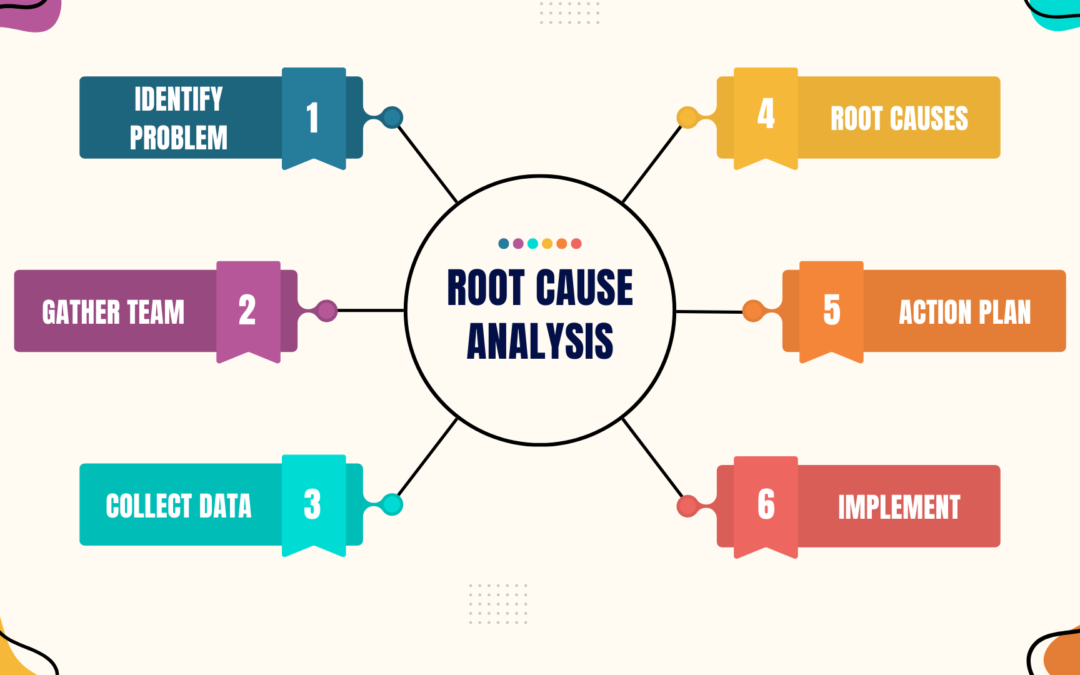
Root Cause Analysis (RCA) is a systematic and structured process used to identify the root causes that results in an undesirable outcome or adverse event and to develop corrective actions. The goal of RCA is not just to treat the symptoms of a problem but to delve into the underlying causes of the failure. By understanding these causes, a hospice agency can develop strategies to mitigate risks and implement corrective actions to prevent future occurrences. This approach to addressing adverse events will lead to improved patient safety and enhanced quality of care. Further, by promoting a culture of safety, RCA fosters a culture of transparency, accountability, and continuous improvement in the hospice agency.
When is root cause analysis used
A hospice agency can use root cause analysis to investigate any unexpected occurrences such as hospice acquired pressure ulcers, medication errors, or process variations where recurrence could result in serious adverse outcomes. Candidates for RCA may be identified via patient satisfaction surveys, incident reports, surveys, or other reports and audit activities. A root cause analysis focuses on systems and processes, rather than individuals in the agency. The objective of the RCA is to reduce the risk of recurrence by identifying opportunities to improve or redesign systems or processes. By implementing system changes, this will lead to sustained system improvement.
Elements of root cause analysis
A comprehensive root cause analysis includes the following elements:
Problem identification: Identify the adverse event to be investigated and gather preliminary information. Events and issues can come from many sources such as patients and their families, staff, or regulatory bodies. The agency should have a process for deciding what events are selected for RCA.
Define the event: Clearly describe the adverse event, error, or near miss. Include specifics such as what happened, where, when, and who was involved.
Gather initial data: Collect all relevant information about the event including incident reports, patient records, and witness statements.
Assemble RCA team: Select the members of the RCA team and the team facilitator. Team members should be knowledgeable about the processes and systems that they will be investigating.
Multidisciplinary team: Form a team that includes individuals with diverse expertise and perspectives. This may include clinicians, administrators, and support staff.
Assign roles and responsibilities: Clearly define the roles and responsibilities of each team member to ensure an organized and effective RCA process.
Data collection and investigation: Collect and organize the facts about the adverse event that will be investigated.
Detailed event timeline: Create a detailed timeline of events leading up to, during, and after the incident. This helps in understanding the sequence of events.
Conduct interviews: Interview staff involved in the event to gain insights into what happened and why. Ensure a non-punitive approach to encourage open and honest communication. Review documentation: Examine all relevant documentation including patient records, policy and procedure manuals, and any relevant logs.
Identify contributing factors and root causes: Identify the situation, circumstances, or conditions that increased the likelihood of the adverse event. Conduct a thorough analysis of contributing factors that lead to identification of underlying process and system issues.
Cause and effect analysis: Use tools such as fishbone diagrams (Ishikawa) or flow charts to map out the possible causes and identify the root causes. Five whys technique: Ask “why” repeatedly (usually five times) to drill down to the underlying root cause(s) of the problem.
Develop action plan: Develop plan for best changing the processes and systems to reduce the likelihood of another similar event. Design and implement changes to eliminate the root causes. This may involve creating new processes.
Corrective actions: Develop specific, measurable, achievable, relevant, and timebound (SMART) corrective actions to address the root causes.
Assign responsibility: Assign responsibility for implementing each corrective action to specific individuals or teams. Timeline: Establish a timeline for the implementation of each corrective action
Implementation and Monitoring: Implement the plan and evaluate its performance. Create mechanisms to gather data that can be used to measure the success of changes that were introduced.
Implement changes: Put the corrective actions into practice. Ensure that staff are trained and aware of changes to procedures or policies. Monitor effectiveness: Continuously monitor the effectiveness of the corrective actions. This may involve regular audits, follow up assessments, and a feedback mechanism.
Documentation and Reporting: Create documentation of the RCA process including all findings, root causes, and corrective actions taken. Share findings with stakeholders, promoting a culture of transparency.
Detailed Reports: Document the entire RCA process, including findings, root causes, corrective actions, and implementation outcomes.
Communicate findings: Share the RCA findings and action plans with all stakeholders including staff, patients, and regulatory bodies.
Continuous improvement: Review the RCA process on a periodic basis to identify any necessary modifications or areas that could benefit from improvement. Continuous improvement ensures that the agency promotes a culture of growth and continuous learning.
Review and revise: periodically review the RCA process and outcomes to ensure sustained improvements. Revise strategies as necessary based on new data and feedback.
Promote a learning culture: Foster an environment where continuous learning and improvement are encouraged and staff feel empowered to report issues and participate in problem solving.
Root cause analysis is a vital tool in hospice care for understanding and addressing the underlying causes of adverse events and errors. By systematically identifying and correcting these root causes, hospice agencies can significantly enhance patient safety, improve quality of care, and promote a culture of continuous improvement. A well-executed RCA resolves the immediate issue and provides valuable insights to prevent future occurrences, thereby ensuring better outcomes for patients and their families.
Used to monitor number of Google Analytics server requests when using Google Tag Manager
1 minute
__utmv
Contains custom information set by the web developer via the _setCustomVar method in Google Analytics. This cookie is updated every time new data is sent to the Google Analytics server.
2 years after last activity
__utmx
Used to determine whether a user is included in an A / B or Multivariate test.
18 months
_ga
ID used to identify users
2 years
_gali
Used by Google Analytics to determine which links on a page are being clicked
30 seconds
_ga_
ID used to identify users
2 years
_gid
ID used to identify users for 24 hours after last activity
24 hours
__utma
ID used to identify users and sessions
2 years after last activity
__utmt
Used to monitor number of Google Analytics server requests
10 minutes
__utmb
Used to distinguish new sessions and visits. This cookie is set when the GA.js javascript library is loaded and there is no existing __utmb cookie. The cookie is updated every time data is sent to the Google Analytics server.
30 minutes after last activity
__utmc
Used only with old Urchin versions of Google Analytics and not with GA.js. Was used to distinguish between new sessions and visits at the end of a session.
End of session (browser)
__utmz
Contains information about the traffic source or campaign that directed user to the website. The cookie is set when the GA.js javascript is loaded and updated when data is sent to the Google Anaytics server
6 months after last activity
_gac_
Contains information related to marketing campaigns of the user. These are shared with Google AdWords / Google Ads when the Google Ads and Google Analytics accounts are linked together.