How to Collect QAPI Data that Shows What Needs to Improve
December 29, 2025 · 4 min read
QAPITechnology

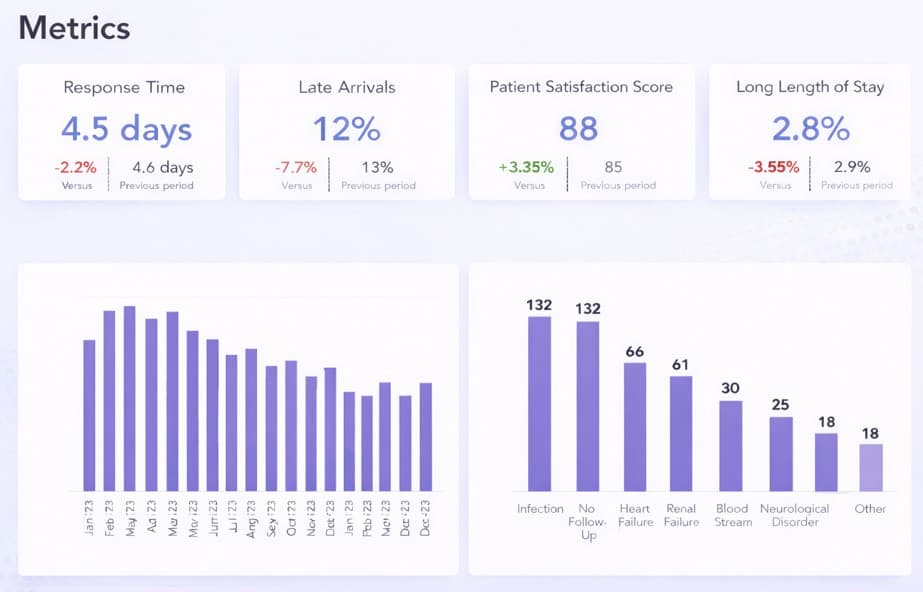
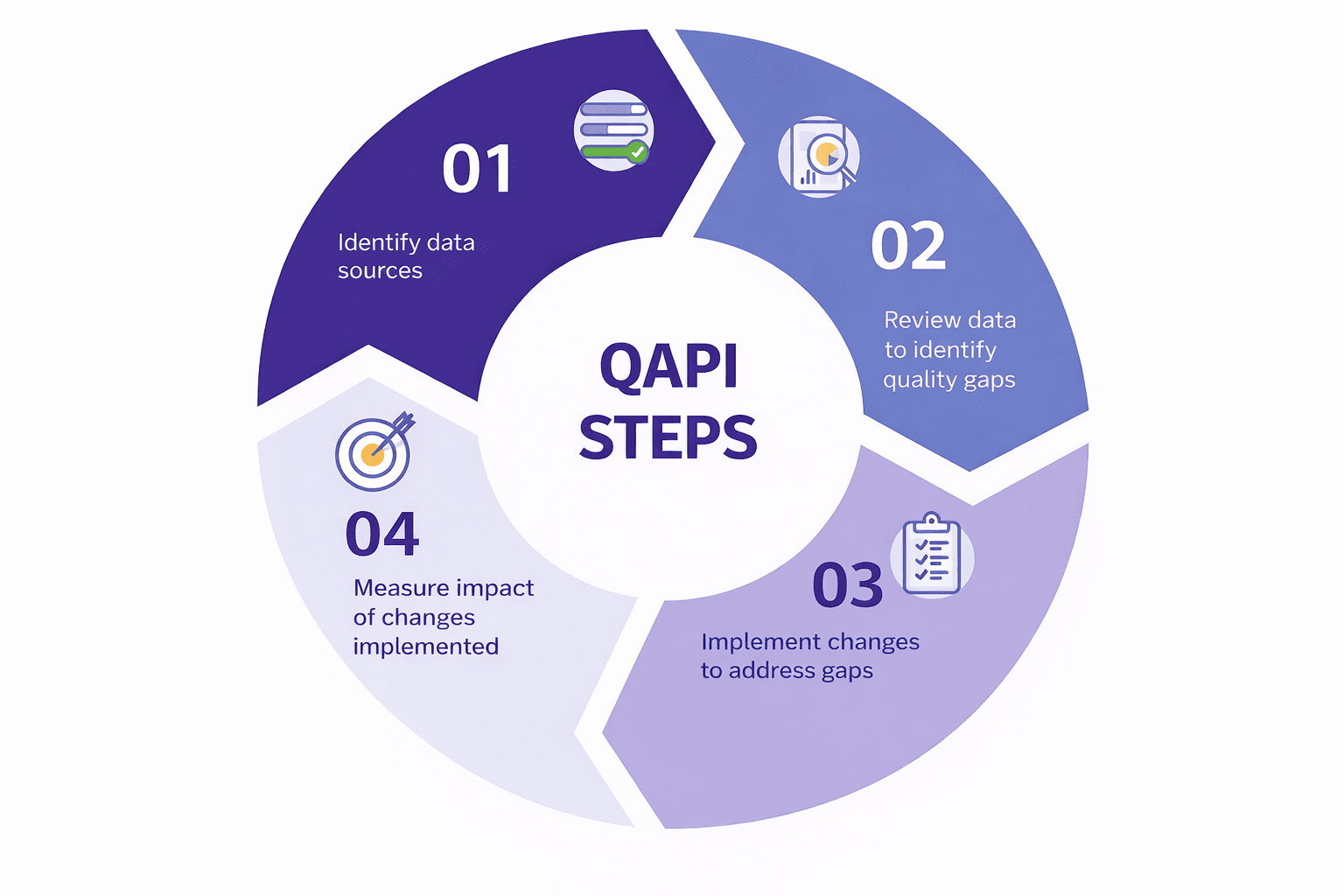
In hospice, most organizations understand why Quality Assessment and Performance Improvement (QAPI) is required. What many do not understand is how to collect data in a way that reveals patterns, risks, and opportunities for improvement.
QAPI data collection does not mean saving every report, printing every dashboard, or drowning in spreadsheets. It means collecting the right information, in the right way, at the right time, so that it provides a story about what is happening inside the organization.
What Data Collection Should Accomplish
A hospice should collect data to answer three essential questions:
- What is happening?
- Is it getting better, worse, or staying the same?
- Does it represent a risk to patients, operations, or regulatory compliance?
If the data that the agency is collecting does not help answer these questions, then either the data points are wrong or the method of collection needs to change.
The Most Common Mistake
Hospices often gather data after a problem has already occurred — almost like autopsy work. That prevents improvement.
Data collection must happen before, during, and after issues appear. Only then can you identify trends and prevent problems instead of reacting to them.
QAPI data can be thought of like a heartbeat monitor: If a patient’s heartbeat is only monitored after the patient has coded, the clinical staff will not have the information that they need to successfully intervene.
What Data Collection Looks Like in Practice
A successful data collection process has three characteristics:
| Characteristic | What It Means |
| Consistent | Collected on a schedule (weekly/monthly/quarterly) |
| Accessible | Staff can enter information quickly without barriers |
| Actionable | Someone reviews it and can make decisions from it |
Data that is collected but never reviewed is not QAPI; it’s record-keeping.
A Realistic Example
Scenario: A hospice agency is receiving more calls from families stating that nurses are arriving late for scheduled visits.
This is a signal, and signals should trigger structured data collection.
Here is how the hospice agency should approach this in QAPI:
Step 1: Define the Data Point
What should be measured?
Scheduled visit time vs. actual arrival time
This must be collected the same way for every visit being reviewed.
Step 2: Create a Simple, Repeatable Tool
The agency does not need software to begin. A chart, form, or shared spreadsheet is enough:
| Patient ID | Date | Scheduled Time | Arrival Time | Late? (Yes/No) | Reason | Reported by | Notes |
Step 3: Collect Data Over a Set Timeframe
The agency can decide on the timeframe over which data will be collected: two weeks? one month? one quarter?
The timeframe must be long enough to show a trend, but short enough to act quickly.
Step 4: Analyze
After the data is collected, review what happened.
| Question | Why It Matters |
| How often are nurses late? | Shows severity |
| Are the same nurses repeatedly late? | Training or workload issue |
| Are late visits tied to geography or routing? | Scheduling issue |
| Are delays tied to documentation load? | Workflow burden issue |
| Does lateness correlate with patient complexity? | Staffing model issue |
Step 5: Intervene
Example findings → Example actions:
| Findings | Action |
| Late arrivals cluster in one region | Adjust territory planning |
| Late due to excessive documentation time | Modify EMR workflow or training |
| Late due to visit volume | Reevaluate caseload standards |
| Late due to travel time | Redraw service area or change routing |
Step 6: Re-Measure
Intervention is not improvement unless data proves it. After the intervention is implemented, the agency must measure again to confirm whether lateness improved. If it did — fantastic. If not — the agency needs to try a new intervention.
This is how QAPI proves effectiveness.
Why This Method Works
This process does three crucial things:
- Turns perception (“families say nurses are late”) into measurement
- Turns measurement into insight (“where, when, why?”)
- Turns insight into action (“fix the problem in the system, not the person”)
When to Start
Intervention and correction of problems identified does not require software systems or large volumes of data. If a hospice is waiting for the “perfect data system,” then the hospice is waiting too long.
- Start small.
- Start with one data point.
- Start even if the first round is messy.
QAPI success begins with a mindset change — not a software purchase.
Takeaway
A hospice agency does not require large volumes of data in order to address issues identified. All that is needed is data that is collected consistently and reviewed with purpose. Data collection is not about volume. It is about visibility.
When data starts showing patterns, it offers the power to prevent problems instead of reacting to them.