QAPI Documentation: How to Show Your Program is Active and Effective
December 30, 2025 · 6 min read
CMSDocumentationQAPISurvey
Hospice leaders often understand that QAPI is required by CMS, but many do not know how to document the program in a way that proves it is genuinely active and effective. CMS surveyors want to see more than binders, charts, or paperwork. They are looking for documentation that demonstrates continuous, data-driven improvement that is tracked over time. In other words, during survey, they are not just evaluating documents. They are evaluating whether documentation reflects real action.
Why Documentation Matters
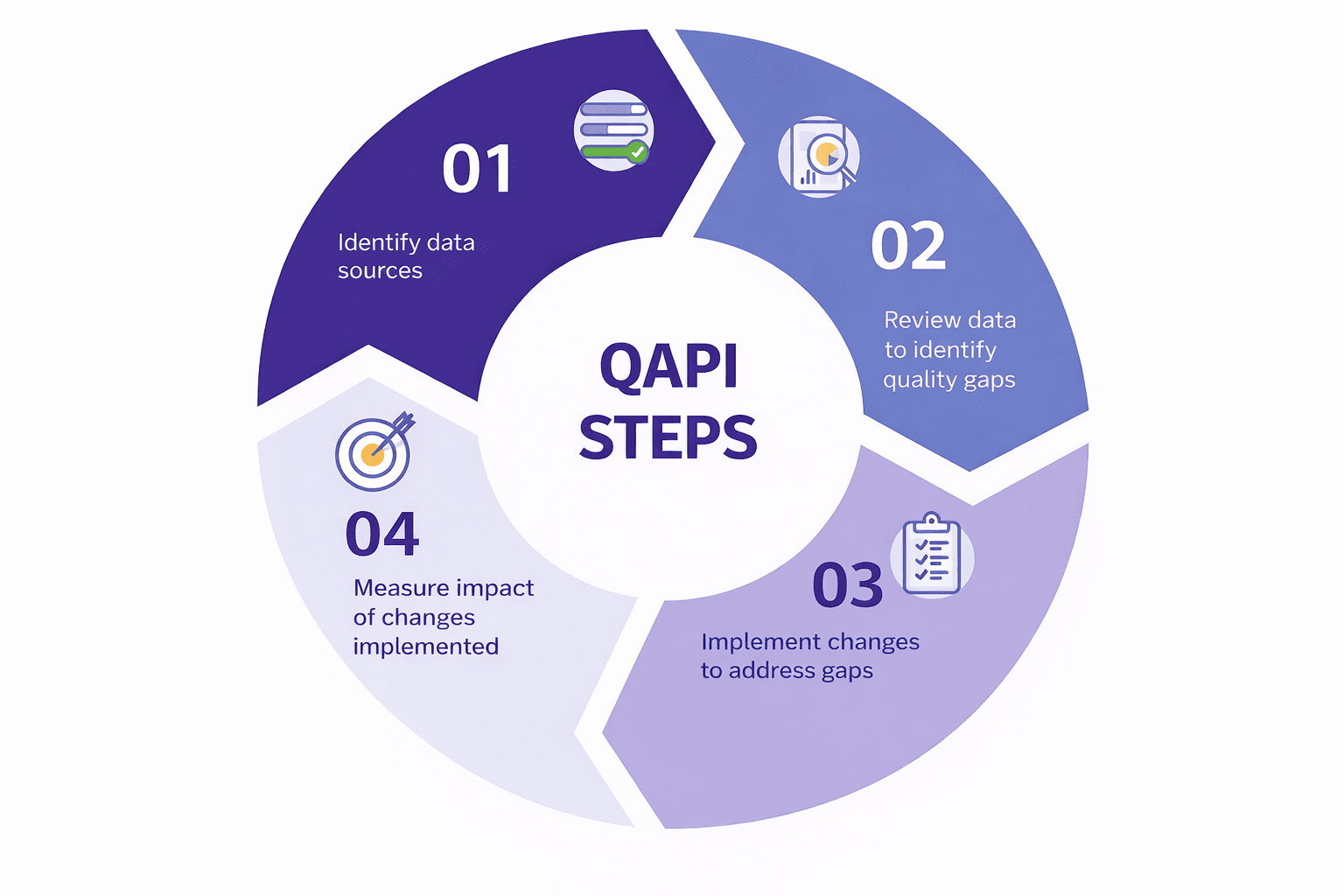
In the context of hospice QAPI, documentation is not about filling binders for the sake of compliance. It is about showing that the organization identifies problems, takes measurable action, analyzes results, and adjusts processes accordingly. CMS defines hospice QAPI as a data-based, objective approach to quality management that continuously monitors the outcomes of services, patient safety, and quality of care and requires that providers use this data to design and implement improvement projects when necessary.
To meet this standard, documentation must answer five questions clearly:
- What was reviewed
- What problem or risk was identified
- What action was taken to address it
- Whether that action made a difference
- What the hospice will do next
If your documentation cannot answer these questions, CMS will not consider the QAPI program compliant, even if the hospice is working hard behind the scenes. The issue is often not that quality work isn’t happening. Rather, the problem is that the work is not being documented clearly enough to show its impact.
Common Documentation Pitfalls
Many hospices get caught in documentation traps that weaken QAPI. They may create binders filled with policies but no records of action, prepare meeting minutes that vaguely state “QAPI discussed” without meaningful content, collect data that is not reviewed or analyzed, or maintain checklists that are completed but not tied to improvement decisions.
These habits create the appearance of a QAPI program without actually demonstrating one. CMS surveyors are trained to recognize documentation that looks like performance but does not show performance.
Start With Defined Indicators
The first step in documenting an effective QAPI program is to begin with defined indicators that are measurable. These indicators form the basis of what the organization monitors and what is documented throughout the year. Examples include pain assessment and management outcomes, timeliness of visits, medication error rates, clinical documentation compliance, grievances or caregiver complaints, and family satisfaction trends. The mistake many hospices make is tracking too many indicators and losing the ability to review and act on them consistently. Monitoring a smaller number or indicators – five to ten well-selected metrics – is more manageable and provides a clearer picture of change over time.
Show How Data Is Reviewed
Once indicators are established, documentation must show how the hospice reviewed data. This is where meeting minutes matter. They should include the date and time of review, the names or roles of participants present, the indicators that were reviewed, and the trends or variances noted. A clear example might read:
QAPI meeting held March 12, 2026. Reviewed late visit data for RN visits Jan–Feb 2026. Findings: 18% of scheduled visits started more than 15 minutes late. Geographic clustering identified in Zone 3. Attending: CEO, DON, QAPI Lead, RN Coordinator.
This simple statement shows activity, data, focus, and context, all elements that demonstrate that QAPI is functioning.
Document Root Cause Analysis, Not Blame
When a pattern or problem is identified, CMS expects hospices to document a root cause analysis. Root cause analysis is not about blame. Documentation should avoid language that points to individuals as “the problem.” Instead, it should focus on contributors such as workflow bottlenecks, documentation burden, staffing configurations, communication breakdowns, unclear policies, EMR inefficiencies, geographic routing challenges, or training needs.
Tools like “Five Whys” or Fishbone Diagrams can help identify these causes and show depth of analysis. For example, if nurses are repeatedly arriving late, documentation might state:
Primary contributing factor appears to be travel distance; route assignments have not been updated to reflect current census distribution. Documentation burden noted as secondary factor; RNs report medication review template adds charting time. The goal is to show thoughtful analysis, not superficial assumptions.
Record Corrective Actions Taken
After the cause is understood, documentation must show what action was taken. This can be operational, educational, technological, or process-based, but it must be specific and measurable. Documentation should include the intervention chosen, the person responsible for implementing it, and the date it was initiated. For instance:
Action: Adjust RN territory assignments to reduce travel time and reallocate visits in Zone 3. Responsible: Director of Nursing and Operations Manager. Implementation date: March 15, 2026.
This tells the surveyor exactly who acted, what was done, and when. It also provides an anchor point for follow-up measurement.
Prove Results With Re-Measurement
Few steps are more important than re-measurement. This is where many hospices fail. QAPI work is not complete until the hospice checks whether the intervention worked — and documents the outcome. If an intervention does not lead to improvement, documentation should show that the hospice adapted or escalated the intervention rather than abandoning it. CMS does not expect hospices to fix everything on the first try; it expects them to document continuous improvement.
A strong re-measurement entry might read:Re-measured late visit percentage on April 15, 2026. Post-intervention result: Late visits reduced to 9% in Zone 3; hospice-wide reduction to 12%. Action considered effective; monitoring quarterly going forward.
An Example of QAPI Documentation Done Well
When all these elements come together, they tell the story CMS is looking for. Consider a full improvement cycle: On January 20, a hospice identifies a 12% medication documentation error rate during chart audits. In February, EMR templates are revised and staff training is conducted. On March 5, re-measurement shows the error rate has dropped to 3%. This is the type of documentation that proves QAPI is not theoretical. It also shows the hospice is functioning with intention and accountability rather than reacting randomly.
Tools That Support Documentation
The tools used to track this information do not need to be complicated. QAPI meeting minutes, action logs, re-measurement logs, and simple trend charts can meet CMS expectations when used consistently. Many hospices find it helpful to maintain a single “QAPI Action Log” that lists each improvement project from start to finish. CMS offers examples, worksheets, and guidance documents on its website for providers who need structure.
Final Takeaway
Ultimately, documentation should tell a story of how your hospice
- Found a risk or opportunity
- Tested an intervention
- Measured the result
- Made further decisions
based on what was learned. When this story can be followed easily and supported with evidence, a hospice has documentation that reflects an active and effective QAPI program. This is the level of clarity CMS expects — not perfection, but proof of progress.