Help children navigate grief. This guide for hospice social workers explores how kids understand death and offers research-backed tools for supportive care.

Grief in Children: 7 Essential Lessons for Hospice Social Workers
read more

Keys to Compassionate Care
Help children navigate grief. This guide for hospice social workers explores how kids understand death and offers research-backed tools for supportive care.

A recent study published in The Journals of Gerontology explores how marital status and social networks impact the quality of end-of-life care for older adults in the United States. Using data from the National Health and Aging Trends Study (NHATS), researchers analyzed ten dimensions of care. Three of these ten dimensions included pain management, respectful treatment,...
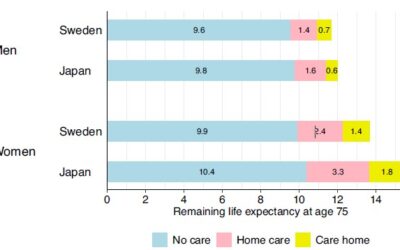
Japan has long been the global benchmark for longevity, particularly among women. Traditional explanations have often pointed to a healthy diet and specific cultural practices. However, a new study published in BMC Medicine (2026) suggests a more complex reality. By comparing the entire population over age 75 in Sweden with significant cohorts in Japan, researchers...

The healthcare landscape is rapidly evolving, moving beyond AI as a simple administrative tool toward its potential as an "Artificial Moral Agent." An intriguing article in the Hastings Center Report, "What Does Moral Agency Mean for Nurses in the Era of Artificial Intelligence?" (Ulrich et al., 2026), explores the shifting boundaries between human clinical judgment and...

Hospice care, since its inception, has been about compassionate care. However, the underlying mechanisms of how it is paid for and how hospice quality is evaluated have undergone a significant transformation. This shift is part of a broader healthcare movement towards value-based care, moving away from simple fee-for-service models. For hospice, this journey can be...

Our previous installments, Strategic Hospice Revenue Cycle Management and Hospice Billing: How to Build a Clean-Claim Process, established that a healthy revenue cycle is the engine that allows an agency to maintain stability and focus on its clinical mission. However, hospice leadership typically focus more heavily on clinical delivery rather than the financial aspects...

In our first installment on Revenue Cycle Management (RCM) - Silent Killers of Hospice Cash Flow (and How to Fix Them) - we discussed why consistent working capital is the foundation of an agency's operational stability. It impacts staffing levels, vendor relationships, and the leadership’s ability to focus on the clinical mission. This second installment investigates...

No hospice leader enters this field because they love claims and remittances. Their focus is not hospice cash flow optimization. Hospice leadership's goal is to ensure a dignified end-of-life journey for patients and families. They work to build an organization that can reliably deliver compassionate care, 24/7, without "behind the scenes" chaos. However, the operational...

Hospice has always been rooted in human presence: symptom relief, careful listening, emotional support, and the work of helping patients and families live meaningfully in the time that remains. That should not change. But if hospice is truly about quality of life, then it is worth asking a serious question: What kinds of technologies - especially non-traditional ones -...