
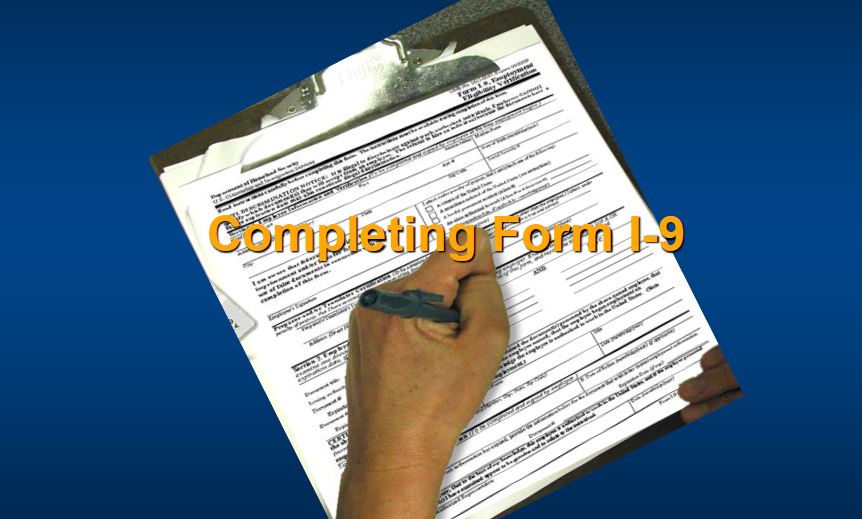
What is a Form I-9?
A Form I-9, also known as an Employment Eligibility Verification form, is a form required by the U.S. government for each employee. The information on this form and its supporting documentation:
- Verifies the employee’s identity
- Verifies the employee’s eligibility to work in the U.S.
When must the Form I-9 be completed?
The Form I-9 is completed as part of the new hire paperwork provided by an employer during the hiring process.
Each new employee must complete and sign the Form I-9 employee section by the end of their first day of employment. The employer must complete and sign the employer sections by the end of the new employee’s third day of employment.
The employer must verify the employee’s eligibility and identification documents and record the document information on the Form I-9. Employees must present original documents, not photocopies, for verification.
Who is required to complete an I-9?
An employer must fill out and retain an I-9 form for all employees, whether or not they are U.S. citizens.
Are there instances where an I-9 form is not required?
A Form I-9 is not required for an independent contractor. A Form I-9 is also not required for employees hired on or before November 6, 1986.
What should you do if you do not receive an I-9 form?
A Form I-9 is required for continued employment. An employer that does not maintain these forms may face fines or criminal penalties.
If an employee fails to provide his employer with the necessary documentation or receipt for a replacement document within three business days of start of employment, the employee can be terminated. If an employee provides a receipt for replacement of missing documents, he has 90 days to present the replacement documents.
Must an employer retain the I-9 form?
An employer must store the Form I-9 and supporting documents together. The employer must ensure that only authorized personnel have access to the stored forms. The forms must be available within 3 days of an official request for inspection.
The forms must be retained for either three years after an employee’s start date or one year after their termination, whichever is later.
Where can you find more information?
Additional resources are available here:
- US Immigration Services I-9 Forms and documents downloads website: USCIS I-9 forms and documents downloads
- List of approved documents: I-9 acceptable documents
- Guidance for completing I-9 forms: How to complete the I-9