What is a MAC?
September 12, 2022 · 2 min read
ClaimsCMS
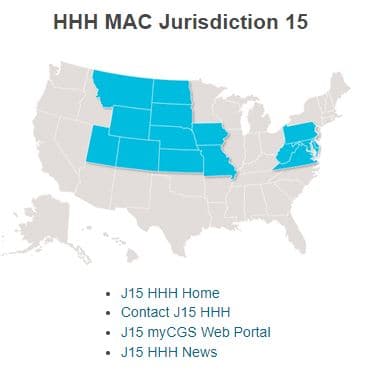
A Medicare Administrative Contractor (MAC) is a private health care insurer that has been awarded a geographic jurisdiction to process Medicare Part A and Part B medical claims for Fee For Service (FFS) beneficiaries.
CMS relies on these contractors to serve as the primary operational contact between the Medicare FFS program and the health providers enrolled in the program.
MACs are multi-state regional contractors who are responsible for administering Part A and Part B claims.
What types of MACs are there?
There are two types of MACs: Part A/B MACs and DME MACs.
Hospice claims are administered by Part A/B MACs. Part A/B MACs process about 95% of all FFS claims.
There are 12 Part A/B MACs.
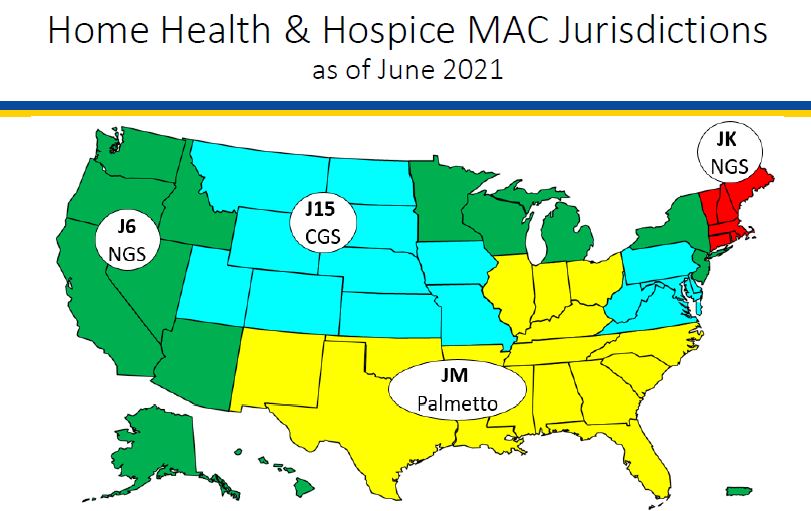
Four of the MACs specialize in processing claims for hospice and home health providers
What geographic areas do each of the hospice and home health MACs cover?
The following map shows the geographic regions that each of the hospice MACs is responsible for administering.
What activities do MACs perform?
MACS perform a number of activities including:
- Provider Enrollment
- Claims processing, payment, and payment notices
- Provider customer service (but not beneficiary customer service)
- Audit provider cost reports
- Respond to provider inquiries
- Audit payments and review medical records
How are MACs measured and how well do they perform?
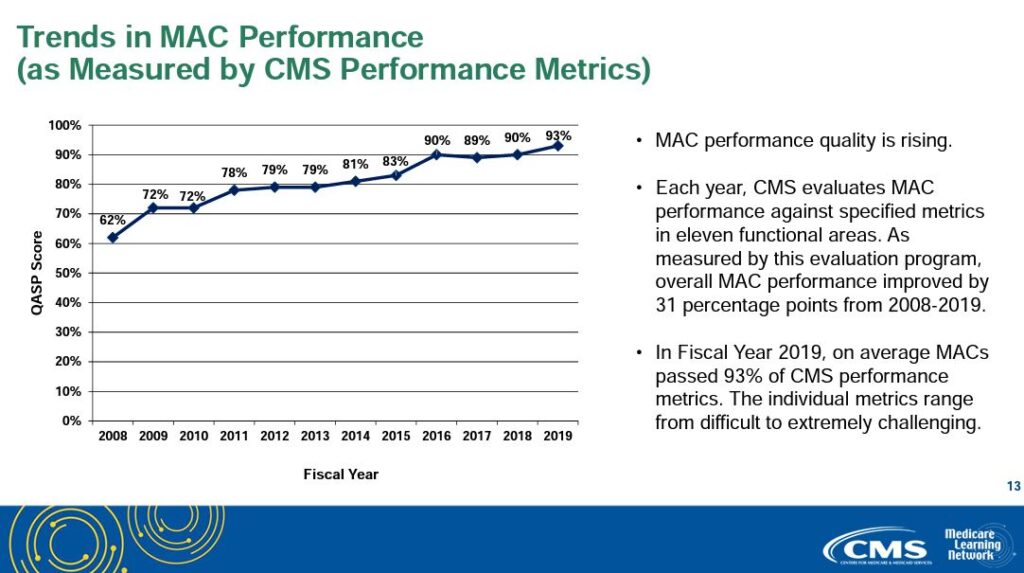
Each year, CMS evaluates MAC performance against specific metrics in eleven functional areas. MAC performance quality has been consistently improving since CMS began measuring MAC performance. Average MAC performance has increased from 62% to 93% since CMS began measuring MAC performance.
Print ‘n take hospice keys
- Seeking to contact your MAC? Here’s their contact information
Download
- A map of MAC regional jurisdictions
Download
Where can you find more information?
This PowerPoint from Medicare Learning Network provides more helpful information about MACs: MLN MAC PowerPoint