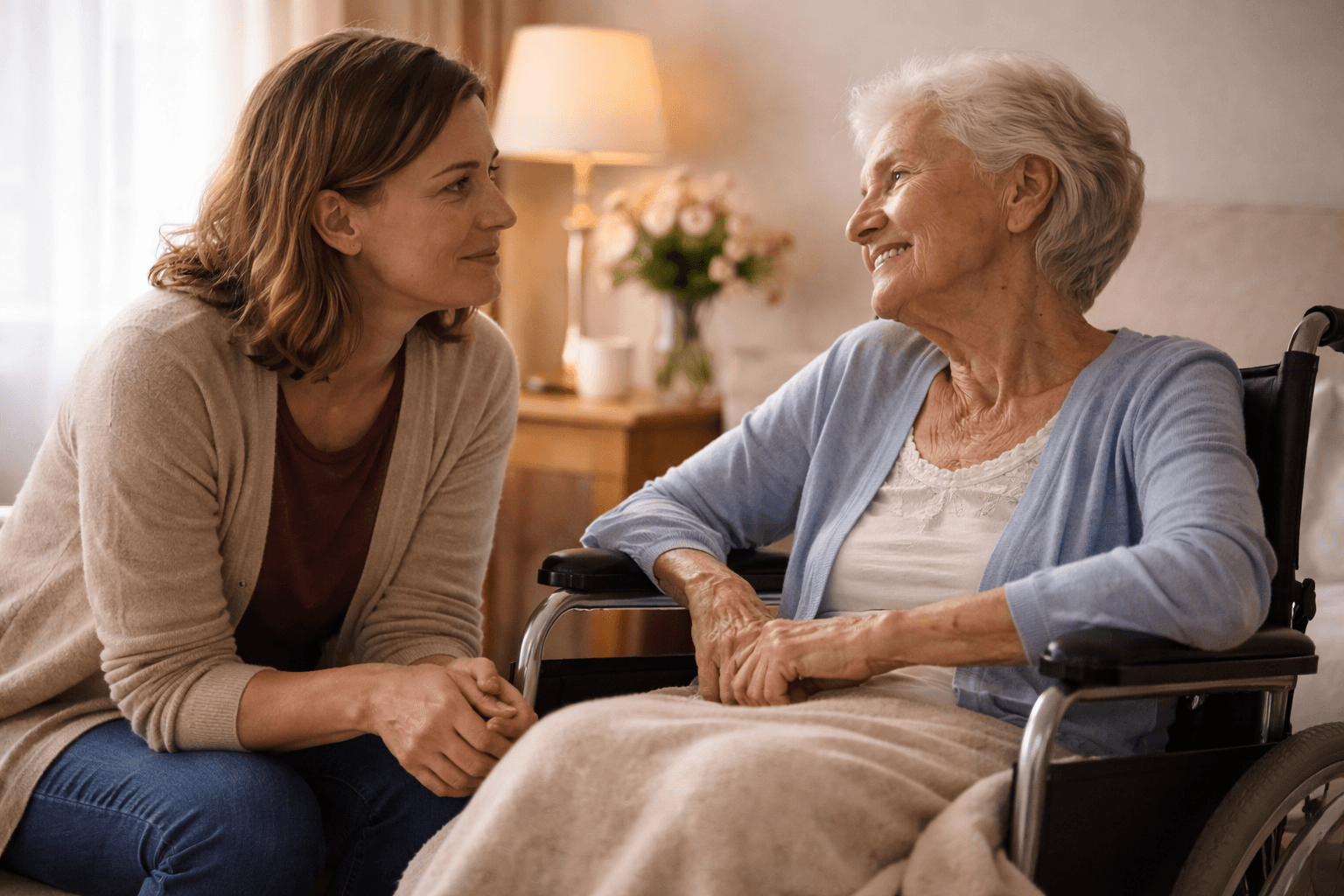
Beyond the Diagnosis: Presence, Empathy, and Clinical Care
November 25, 2025 · 7 min read
EmpathyVolunteer
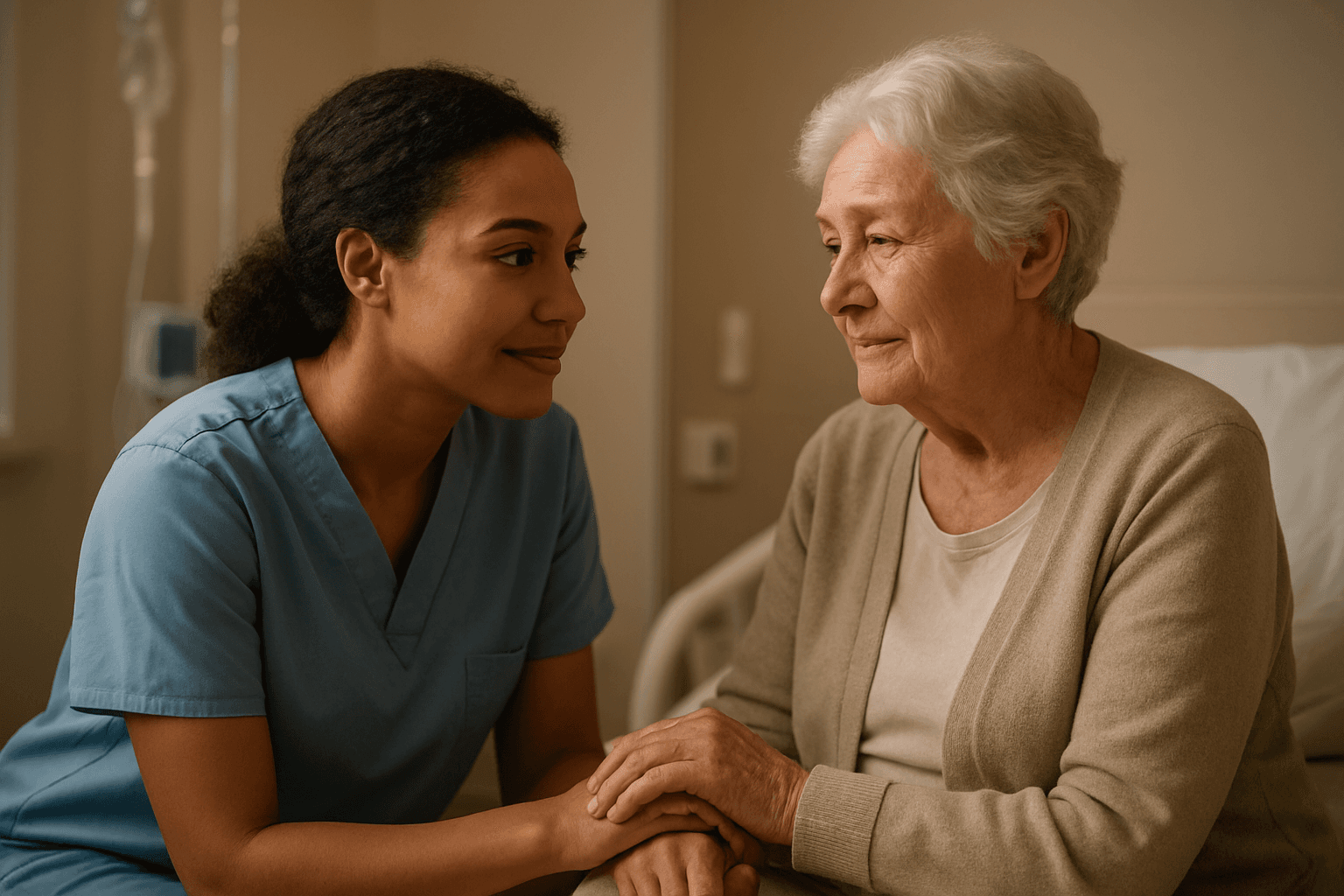
The multiple facets of healthcare
In most conversations about healthcare, we talk about the clinical side first.
Did the doctor order the right tests?
Was the surgery successful?
What did the scan show?
Those questions matter, of course. But if you’ve ever been the patient in the bed – or the family member sitting in the hard chair next to it – you know there’s another part of care that rarely gets named: the simple act of having someone sit with you, listen to you, and help you make sense of what’s happening.
That quiet, human part of medicine is often treated as “extra.” It isn’t. For many patients and families, it’s the only part they actually remember.
We train for procedures, not for presence
From the very beginning, most healthcare education is built around clinical competence: anatomy, pharmacology, lab values, imaging, guidelines, algorithms. Students are graded on what they can do and what they can recite.
What usually isn’t graded – and often isn’t explicitly taught – is how to sit at the edge of the bed when there’s nothing left to fix or how to stay in the room when someone starts to cry. No one runs an exam on how well you handle that long silence after you say, “I’m so sorry, this isn’t the news we were hoping for.”
Those skills are treated as personality traits or “nice extras,” instead of as essential tools. Yet they are every bit as important as knowing which medication to prescribe.
The information gap no one talks about
On top of this, there’s another major blind spot: information asymmetry.
Clinicians live in medical language all day long. “Metastatic,” “ischemic,” “palliative,” “multi-organ failure,” “guarded prognosis” – these phrases roll off the tongue without a second thought. To a scared family member who hasn’t slept in two days, they might as well be another language.
Now layer in the emotional context. When someone you love is suddenly very sick, your brain goes into survival mode. You are exhausted, anxious, sometimes in shock. You’re trying to hold it together, call relatives, update your boss, sign forms, and somewhere in there, a doctor appears and “explains” what is happening.
From the clinician’s perspective, they’ve done their job. They’ve “served” the family the information: diagnosis, treatment options, risks, benefits, prognosis. They may even feel they’ve been incredibly clear.
From the family’s perspective, it can feel like being hit by a wave. The words come, you nod along, you maybe ask one question and then later you realize you have no idea what was actually said. You don’t know what to expect tonight, or tomorrow, or next week. You don’t know what to tell your kids. You don’t know what “nothing more we can do” really means.
It’s not that the family is unwilling to listen or “non-compliant.”
It’s that they are overwhelmed.
Sometimes they literally do not understand the terminology. Other times the anxiety is so high that their brain can’t properly process or store the information. Cognitive bandwidth shrinks in a crisis. No amount of extra talking fixes that on its own.
“We already told them” is not enough
If you spend time on a hospital ward, you’ll occasionally hear a frustrated comment like, “We already explained this to them,” or, “We had a long family meeting yesterday – they just don’t get it.”
That frustration is human, but it misses the point.
Explaining once, under fluorescent lights, with alarms going off and fear hanging in the air, is rarely enough. Families need time, repetition, and a chance to ask the same question three different ways without being made to feel stupid or difficult.
They also need someone who can bridge the emotional and informational gap at the same time:
“Yes, I know this is a lot. Let’s go through it slowly. Here’s what we know right now. Here’s what we don’t know. Here’s what the next 24 hours will probably look like.”
You don’t need a prescription pad for that conversation. You need patience, empathy, and the willingness to stay present while someone’s world is tilting.
Presence as real, tangible care
It’s easy to dismiss “sitting with someone” as soft or secondary. But think about what presence actually does:
- It reduces isolation. A patient facing a frightening diagnosis or the end of life often feels profoundly alone, even in a busy hospital. Having another person nearby, especially someone who isn’t rushing in and out, changes that.
- It helps people process. When a volunteer, chaplain, nurse, or physician takes the time to go over information again, answer questions, or simply listen, patients and families can finally start to make sense of what they’ve been told.
- It validates emotions. Fear, anger, grief, numbness – these reactions are normal in a crisis. When someone says, “Of course you’re overwhelmed; anyone would be,” it gives people permission to feel what they’re feeling instead of wasting energy trying to hide it.
None of this shows up on a lab report. But it absolutely affects how people experience their illness, how they cope afterward, and sometimes even how well they stick to a treatment plan.
What we don’t teach – but should
Most clinicians pick up these skills informally, by watching role models or making mistakes and learning from them. Very few are given structured practice in:
- Sitting in silence without rushing to “fix” it
- Delivering serious news in plain language and then actually checking what was understood
- Recognizing when a patient or family is too anxious or exhausted to absorb more, and pausing instead of pushing on
- Partnering with chaplains, social workers, and volunteers to make sure no one is left to face the hardest moments alone
These aren’t just “nice qualities” for naturally empathetic people. They are learnable skills that can and should be a formal part of training – in medicine, nursing, social work, and other health professions.
Programs where students sit with hospice patients, accompany families, or spend time in palliative care and chaplaincy settings can be powerful training grounds. They teach, in a very concrete way, that care is not only about interventions. It is also about witness, presence, and kindness in the middle of uncertainty.
Bringing the human side back into the center
None of this is an argument against clinical excellence. People need accurate diagnoses, evidence-based treatments, and competent procedures. Lives depend on that.
The point is that clinical care and human presence are not in competition. They are two halves of the same promise: we will do what we can for your body, and we will not abandon you – or your family – emotionally while we do it.
For patients and families in crisis, the memory that stays is often not the name of the medication or the details of the scan. It’s the doctor who pulled up a chair instead of standing in the doorway. The nurse who came back after the family meeting and said, “What questions are popping up now that everyone has left?” The volunteer or chaplain who stayed into the night so a loved one didn’t die alone.
As we think about how to improve healthcare, we can’t stop at better technology or more efficient systems. We have to also ask:
- Are we making space for presence?
- Are we teaching future clinicians how to communicate with people who are scared and confused, not just with people who are calm and well?
- Are we valuing the emotional and spiritual labor that chaplains, nurses, social workers, and volunteers do every day at the bedside?
Because for many patients and families, the most healing part of their experience is not what was done to them, but who was willing to sit with them.
Additional reading material
- Geisinger Medical Students and the No One Dies Alone Program
- Communication in healthcare: a narrative review of the literature and practical recommendations
- A systematic review of research on empathy in health care
- Communications Skills for Conversations about Serious Illness
- Ring Theory: Supporting individuals in crisis